Why California Gas Prices Rise Every Summer — and Why E85 Often Doesn’t
June 11th, 2026
Every spring, California drivers brace for it. Gas prices climb, sometimes sharply, and the explanations that follow tend to involve refinery maintenance, supply constraints, and the annual transition to summer gasoline.
The prices may feel random. They’re not.
California’s summer fuel market follows a pattern almost every year, and understanding that pattern helps explain why E85 often maintains a significant price difference from regular gasoline during the warmer months.
Why gasoline prices rise in the summer
California requires a specialized gasoline blend during the warmer months to help reduce smog-forming emissions. Producing and distributing this fuel can place additional pressure on supply, particularly during the seasonal transition from winter fuel.
At the same time, California’s fuel market operates somewhat independently from much of the country. Limited supply flexibility means that refinery outages, maintenance, or unexpected disruptions can have a larger impact on pump prices than drivers might see elsewhere.
The result is familiar to California motorists: gasoline prices often move higher as summer approaches and can remain elevated throughout the season.
Why E85 behaves differently
E85 is made primarily from ethanol blended with gasoline, and its pricing is influenced by a different set of market factors than conventional gasoline.
Because E85 is not tied as closely to California’s refining system, the same events that can push gasoline prices higher do not always affect E85 to the same degree. As a result, E85 has often maintained a substantial price advantage over regular gasoline throughout the summer months.
For drivers already using E85, that difference can become especially noticeable when gasoline prices begin climbing.
What the price gap can look like
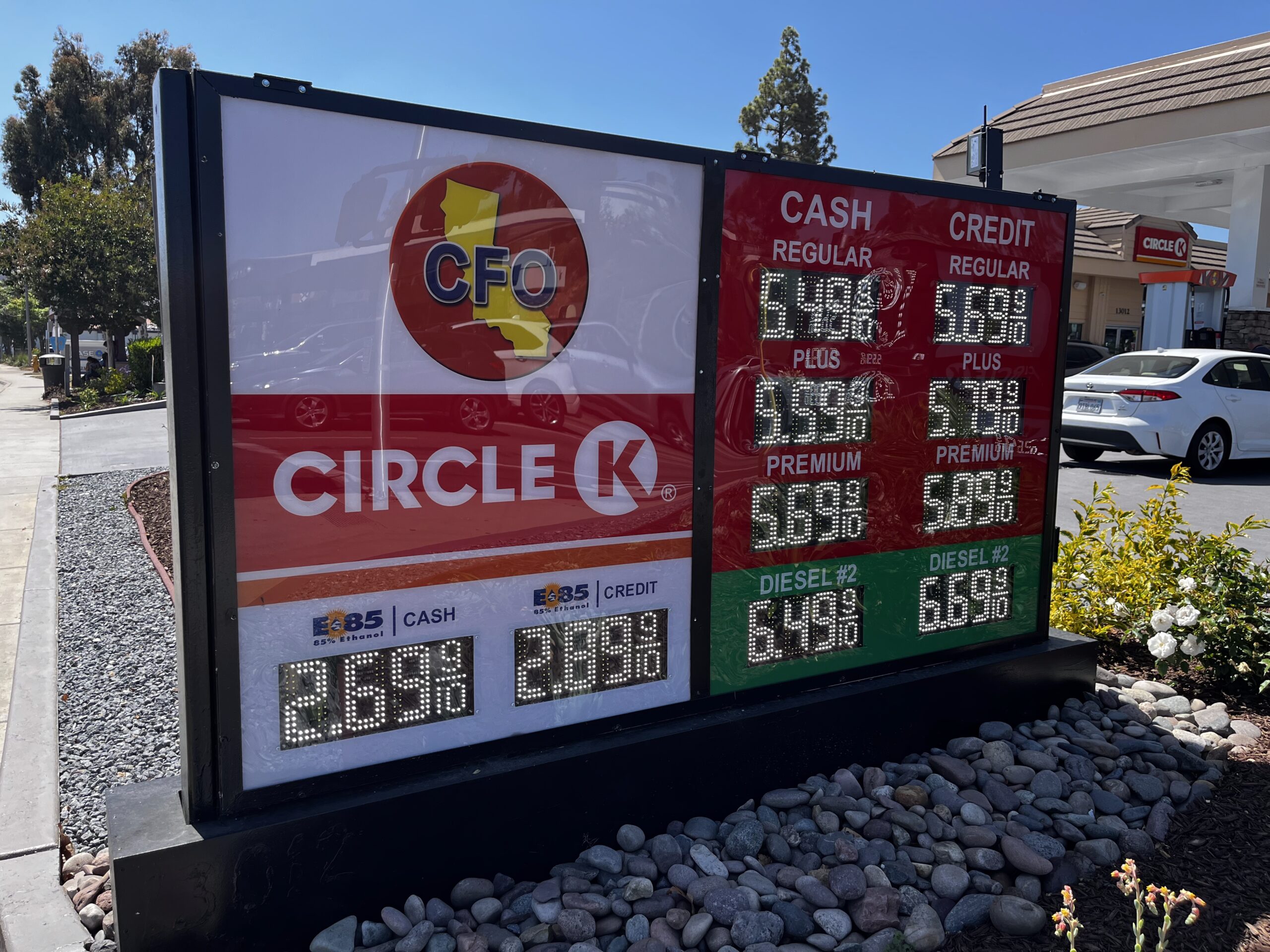
Across California, E85 is consistently priced well below regular gasoline.
When gasoline prices rise during the summer, that spread often becomes even more visible. For flex fuel vehicle drivers, it can translate into meaningful savings at the pump during one of the most expensive seasons.
The opportunity ahead
Today, approximately 1.1 million flex fuel vehicles are already on California roads, and more than 600 stations offer E85 statewide. Including over 500 supplied by Pearson Fuels. AB 2046, the Access to Affordable Gas Act, would create a pathway for drivers with compatible vehicles to legally install approved conversion technology and operate on E85. If enacted, it would expand access to a fuel option that many flex fuel drivers already use today.
What drivers can do today
If your vehicle is already flex fuel capable, the Pearson Fuels App can help you locate nearby E85 stations.
Not sure whether your vehicle is compatible? A yellow fuel cap, an FFV badge, or a quick vehicle lookup can help determine whether your vehicle is designed to run on E85.
California’s summer fuel price increases may be predictable. For many E85 drivers, having another option at the pump is as well.